

How each method works
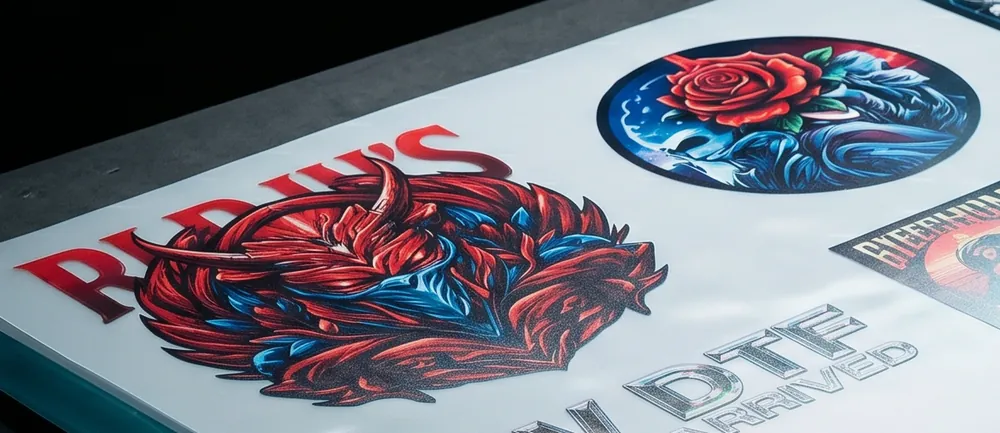
- DTF (direct to film): the design is printed in full color on film, backed with white ink and a hot-melt adhesive powder, then cured. You heat press it onto the garment and peel the film.
- UV DTF: the design is printed with UV-cured inks on an adhesive layer and carried on a transfer film. There is no heat. You peel, place, press down and lift the film, like a decal with no background.
- Screen printing: ink is pushed through a stenciled mesh, one screen per color, straight onto the garment, then cured in a dryer.
Side by side
| Factor | DTF | UV DTF | Screen printing |
|---|---|---|---|
| Goes on | Apparel and soft goods: cotton, polyester, blends | Hard, smooth goods: tumblers, glassware, signage, awards, packaging | Apparel and flat goods, with ink matched to the fabric |
| How it is applied | Heat press, hot peel | By hand, peel and stick | On press, then through a dryer |
| Setup | None beyond the art file | None beyond the art file | Films, screens and registration for every color |
| Cost structure | By the sheet, so cost follows the film you use | By the sheet, so cost follows the film you use | Setup paid up front, then a low cost per print |
| Color count | Full color at no extra cost | Full color at no extra cost | Each color adds a screen and setup time |
| Run size sweet spot | Short and mid-size runs, one-offs, personalization | Short and mid-size runs of hard goods | Long runs of the same design |
| Watch out for | Large solid areas feel heavier than ink printed into the shirt | Not for fabric, rough surfaces or flexible items | Small multicolor orders rarely cover the setup |
Where DTF wins
DTF earns its place on short and mid-size runs with a lot of color. A 24-piece left chest order with a six-color logo is the classic case. On press that means six screens, six setups and a reclaim, all for two dozen shirts. As transfers, it is one strip of a gang sheet and a few minutes at the heat press.
It also solves mixed orders. The same transfer goes on cotton tees, polyester performance shirts and blended hoodies, so one sheet can cover a team order that would need different inks on press. Names, numbers and one-off personalization ride along on the same sheet with no setup. You can also keep transfers on the shelf and press to order, which keeps you out of printed inventory.
Speed counts too. With no screens to burn, a rush job is limited by how fast the transfers arrive. Hyperprints turns DTF and UV DTF orders around in 24 to 48 hours.
Where screen printing wins
Once the screens are made, each additional print costs very little. On 500 one-color shirts, nothing beats a press for cost per piece or for speed off the line. Transfer cost stays about the same for every piece, so at some quantity the two lines cross. Where they cross depends on your color count, your labor and your press, so run the numbers for each job.
Screen printing also wins on hand and on effects. Water-based and discharge inks leave a print you can barely feel. Puff, metallic and high-density inks do things a film transfer cannot. If the customer wants a big, solid, soft front on a fashion tee, that is a press job.
Where UV DTF wins
UV DTF covers the items a heat press cannot reach. Tumblers, glassware, signage, awards and packaging take a full-color, peel-and-stick transfer with no heat and no weeding. A 40-piece tumbler run for a corporate customer becomes an afternoon of applying by hand.
It needs a clean, smooth, rigid surface. It is not a garment product, so keep it off fabric, and test first on textured, coated or flexible items.
Jobs that use more than one
Plenty of orders split. A brewery wants 300 one-color tees, 24 staff polos with a full-color left chest, and logo pint glasses. That is screen printing, DTF and UV DTF on one invoice. A shop that owns a press and buys its transfers can say yes to all three without adding equipment. At Hyperprints, DTF and UV DTF run on the same account.
A quick way to decide
- Hard, smooth item: UV DTF.
- Fabric, short run or many colors: DTF.
- Fabric, long run, few colors, same design on every piece: screen printing.
- Fabric, long run, but every piece is different (names, numbers): screen print the base design and add DTF for the personalization.
- Due in two days with no screens burned: DTF.
Questions
Is DTF cheaper than screen printing?
For short runs and multicolor art, usually yes, because there are no screens and no setup. On long runs of one design, the screen printing cost per print drops below what a transfer costs.
Can I use UV DTF on shirts?
No. UV DTF is a peel-and-stick transfer for hard goods such as tumblers, glassware, signage, awards and packaging. Use DTF for apparel and soft goods.
Can I order DTF and UV DTF from the same account?
Yes. Hyperprints runs DTF and UV DTF on one account, and each has its own gang sheet builder.
How are the transfers priced?
Gang sheets are priced by sheet length: about $0.60 per inch for DTF and about $1.25 per inch for UV DTF. Those are estimates, and the builder quotes the exact price as you build.